Biography
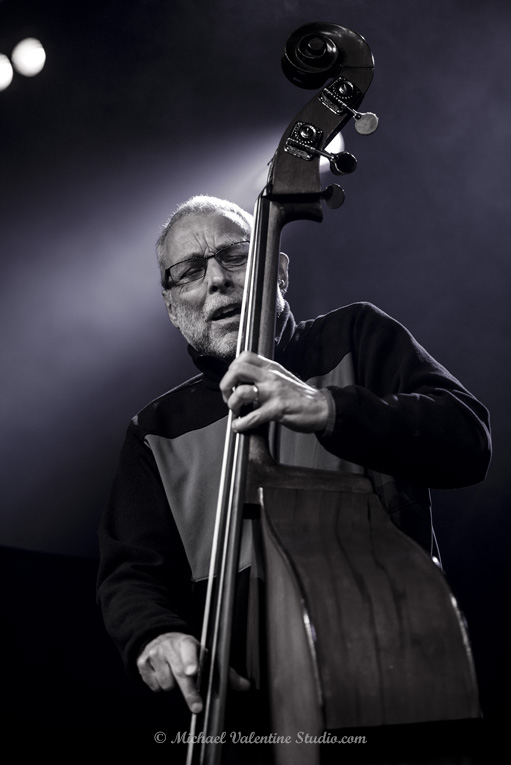
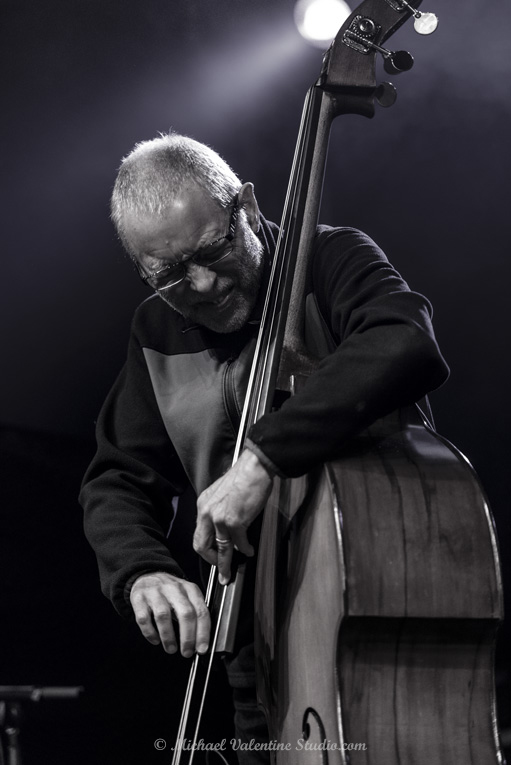
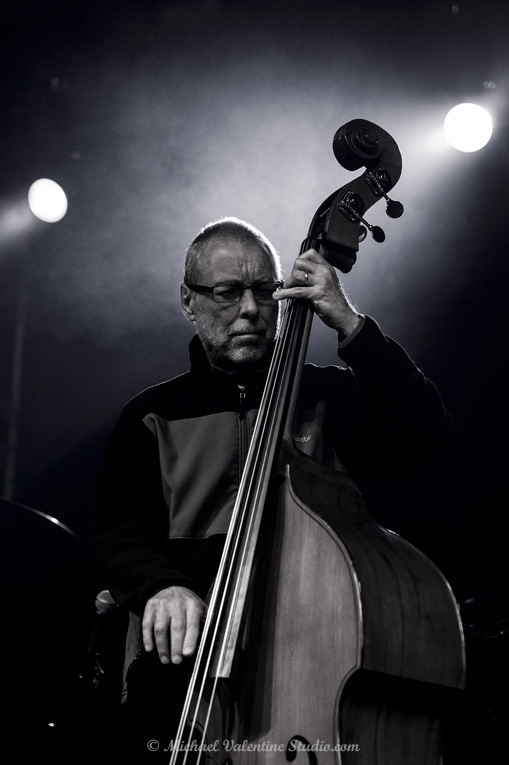
Since Holland’s professional debut in the
mid 1960s, that voice has been heard in a remarkable number of
different contexts. From the electric whirlwind of Miles Davis’
“Bitches Brew” era band to the elegant flamenco of
his collaboration with Spanish guitar legend Pepe Habichuela;
accompanying the great vocalist Betty Carter in her last years
to forging a new sound with the pioneering avant-garde quartet
Circle alongside Chick Corea, Anthony Braxton, and Barry Altschul;
standing alongside legends like Stan Getz, Hank Jones, Roy Haynes,
and Sam Rivers to providing early opportunities to now-leading
players like Chris Potter, Kevin and Robin Eubanks, or Steve Coleman;
Dave Holland has been at the forefront of jazz in many of its
forms since his earliest days.
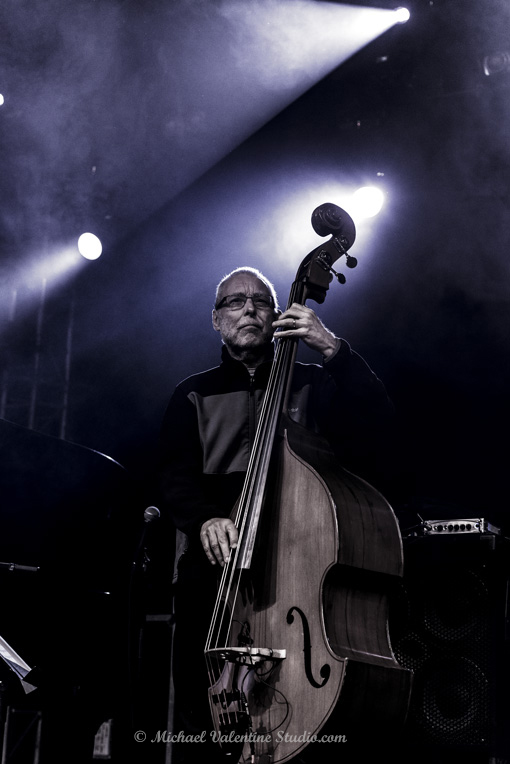
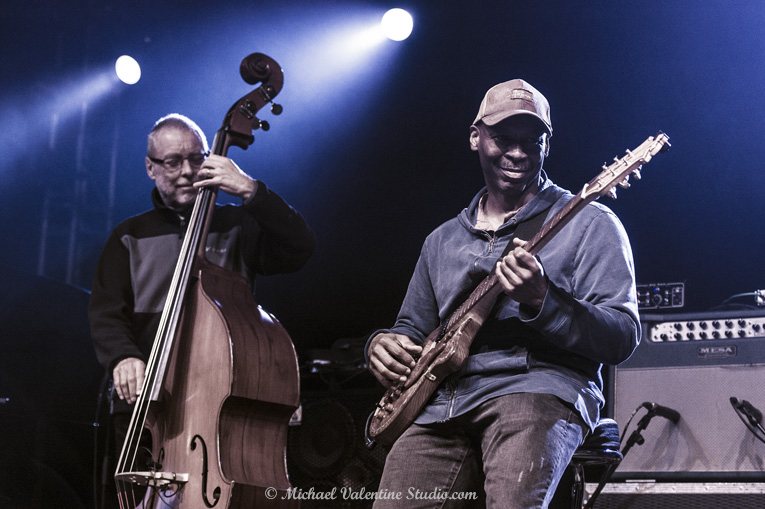
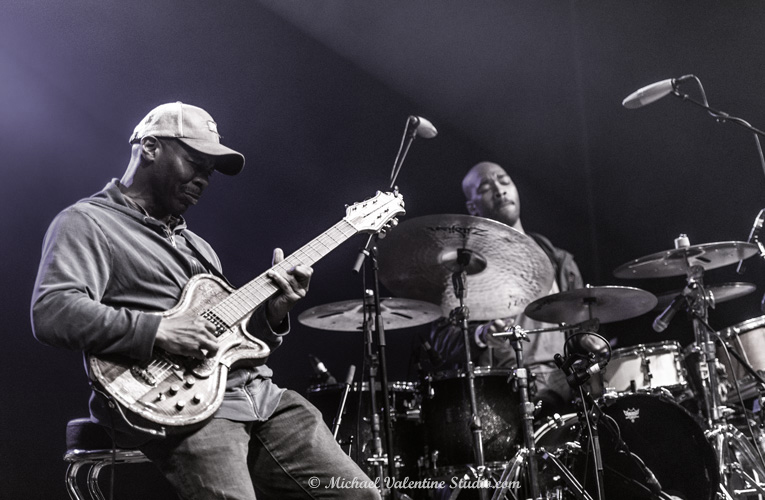
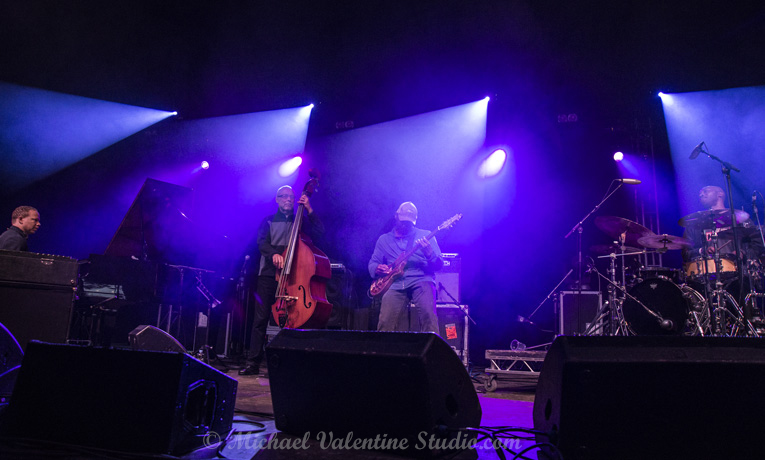
In 2013, Holland celebrated 40 years as a leader
in trademark fashion, by looking decidedly forward. On the anniversary
of his first release, “Conference of the Birds,” which
featured Rivers, Braxton and Altschul, Holland unveiled his latest
quartet, Prism, a visceral electric band featuring his longtime
collaborator Kevin Eubanks along with keyboardist Craig Taborn
and drummer Eric Harland.
In addition to Prism, Holland continues to lead
his Grammy-winning big band; his acclaimed quintet with saxophonist
Chris Potter, trombonist Robin Eubanks, vibraphonist Steve Nelson,
and drummer Nate Smith; and the Overtone quartet, with Potter,
Harland, and pianist Jason Moran. In recent years Holland has
been performing in a duo context with pianist Kenny Barron and
with flamenco legend Pepe Habichuela; a follow up to “Hands,”
his 2010 recording with Habichuela, is due in the fall of 2013.
And he continues to explore his solo voice, as documented on the
albums “Emerald Tears” (1977), “Ones All”
(1993), and “Life Cycle” (1982), a solo cello recording.
Since 2005, Holland’s output has been released
on his own Dare2 Records label, founded so that the bassist could
exercise greater control over the recording and release of his
music. The move came on the heels of a fruitful relationship with
ECM Records that had lasted for more than three decades. Attentive
to devising a one-of-the-kind packaging to match the product within,
Holland drafted world-famous graphic designer Niklaus Troxler
to craft the label’s distinctively bold and colourful look.
Born in Wolverhampton, England in 1946, Holland
shifted seamlessly between jazz traditions from the beginning.
While still in his native country, he collaborated with forward-thinking
peers like saxophonists Jon Surman and Evan Parker and pianists
Chris McGregor and John Taylor while also playing with more traditional
forebears from an earlier generational, such as saxophonists Tubby
Hayes and Ronnie Scott. It was while playing at Scott’s
storied Soho jazz club in 1968 that Holland was spotted by Miles
Davis, who immediately hired the young bassist for his ground-breaking
electric ensemble.
Over the next two years, Holland would appear
on Davis’ landmark recordings “Filles de Kilimanjaro,”
“In a Silent Way” and “Bitches Brew,”
and meet many of the artists with whom he would continue to revolutionize
modern jazz. They include such renowned names as Chick Corea,
with whom he co-founded the short-lived but influential quartet
Circle; Jack DeJohnette, a frequent rhythm section partner during
Holland’s ECM years and co-leader of the collective Gateway
trio with Holland and guitarist John Abercrombie; and Herbie Hancock,
with whom Holland would reunite in the mid-90s and record such
genre-defying albums as “The New Standard” and 2008
Grammy Album of the Year award winner “River: The Joni Letters.”
After leaving Davis’ group, Holland embarked
on his solo career with the release of “Conference of the
Birds” in 1973, marking the beginning of several key relationships:
with ECM, with Braxton, and with Sam Rivers. At the same time,
he was a prolific sideman both in the jazz world and without,
where he recorded with rock and folk musicians including Bonnie
Raitt, John Hartford, and bluegrass legend Vassar Clements.
The 1980s saw the formation of Holland’s
first working quintet, featuring alto saxophonist Steve Coleman,
trumpeter Kenny Wheeler, and trombonist Julian Priester, which
would gradually transform into the quartet with Coleman, drummer
Marvin “Smitty” Smith, and Kevin Eubanks that recorded
“Extensions” in 1988 – the only one of Holland’s
recordings to include future Tonight Show bandleader prior to
their reunion in Prism.
The foundations for most of the groups that Holland
currently leads were laid in the 1990s, when he founded his current
quintet and his much-acclaimed big band. The latter won two Grammy
awards in the Best Large Jazz Ensemble Album category, for its
debut, “What Goes Around,” in 2002 and for its follow-up,
2005’s “Overtime,” both on “Dare2.”
A third Grammy came in 1999 in the Best Jazz Instrumental Performance,
Individual or Group category, for the all-star quintet record
“Like Minds” (Concord), with Gary Burton, Chick Corea,
Pat Metheny, and Roy Haynes.
A Fellow of the Guildhall School of Music &
Drama in London, where he studied from 1965-68, Holland has received
honorary doctorates from Birmingham Conservatoire in England and
both Boston’s Berklee College of Music and New England Conservatory,
where he has been a visiting artist in residence since 2005. He
served as artistic director for the Banff Centre Jazz Workshop
in Alberta, Canada for seven years in the 1980s and is currently
an artist in residence at the Royal Academy of Music and the University
of Miami.
Further
Recommended
Viewing |
Click Dave Holland's image below to see him with
Kenny Barron
@ the London Jazz Festival, 2014...
_150prev.jpg)
Go
back to the Love Supreme Jazz Festival 2014 home page.
Go
back to the jazz gallery.
[ Top ]