Biography
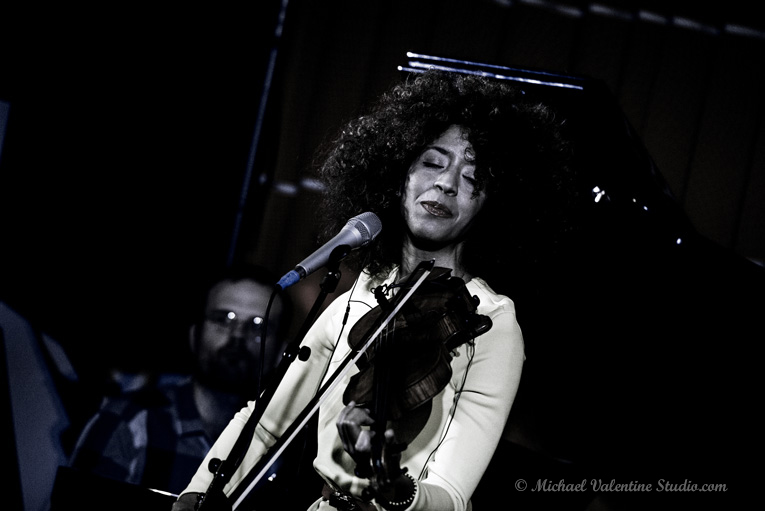
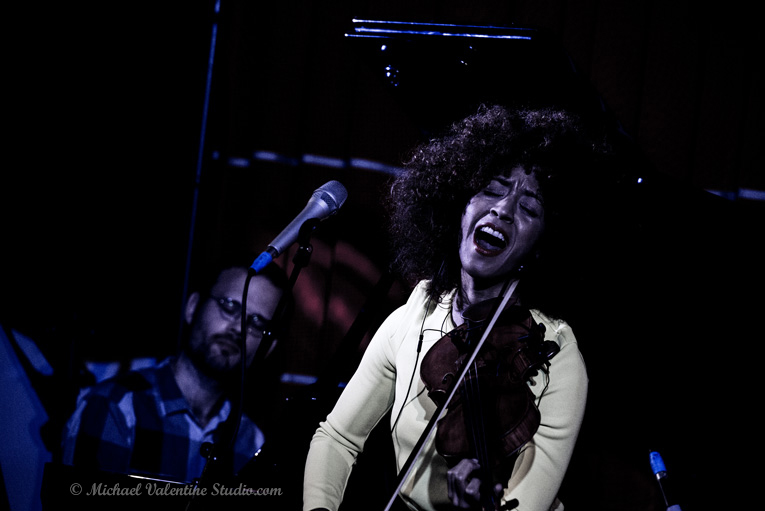
Before she picks up her violin and walks onstage,
Yilian Cañizares pays homage to her ancestors. Candles
are lit. Prayers are said, and offerings made. Then as the houselights
dim and her group of crack musicians file on before her, she’ll
lean down and touch the floor as she enters.
“This always puts me fully in the
moment,” says the vivacious Cuban singer and instrumentalist.
“It allows the music and the ancestors to flow through
me, to reach people even if they don’t speak my language.
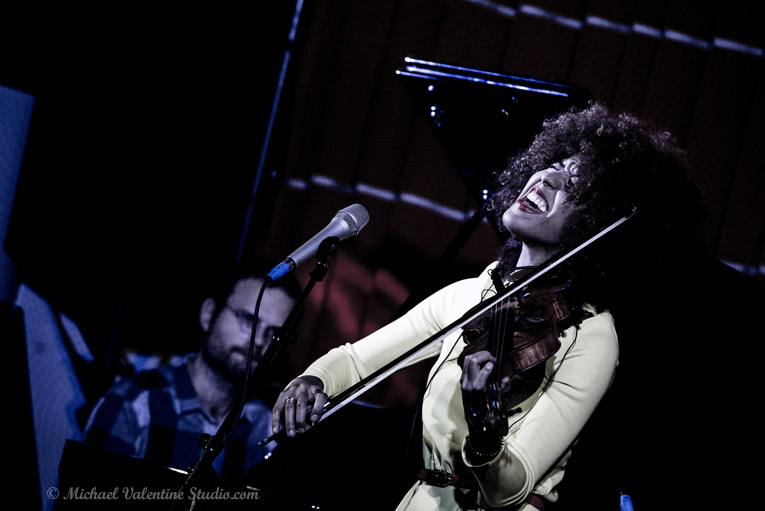
I go into a trance when I perform live,” she adds with
a grin. “It is like a religious experience.”
All those who have marvelled at her fiery blend
of jazz, classical and Afro-Cuban rhythms, who’ve got goosebumps
from her otherworldly voice, will testify to feeling transformed.
Whether onstage or on record there are few artists as impressively
talented as Cañizares, a Havana-born, Swiss-based thirtysomething
with a respect for the past and a feel for the future - oh, and
a smile to die for.
Two acclaimed albums, 2013’s self-produced
“Ochumare” and 2015’s “Invocación,”
helmed by Alê Siqueira (Roberto Fonseca, Omara Portuondo)
have strengthened Cañizares’ reputation as a trailblazer
and boundary crosser “por excelencia.” Not for nothing
was she declared ‘revelation of the year’ by French
weekly Le Novel Observateur: with her charisma, tapestry of influences
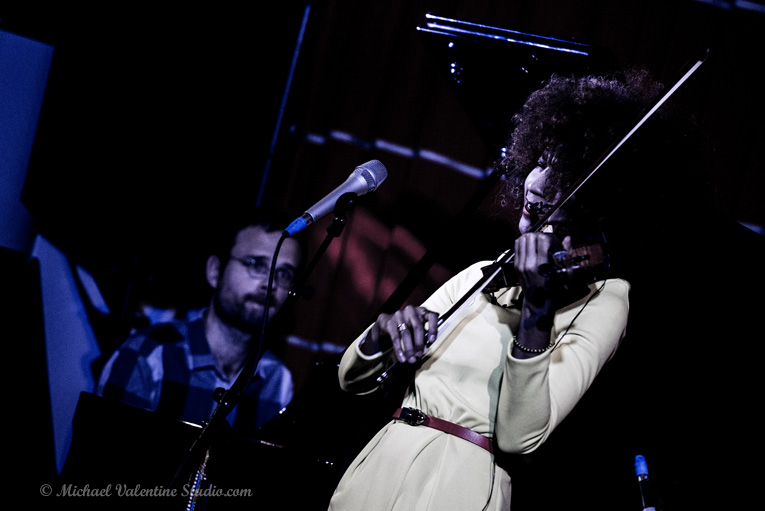
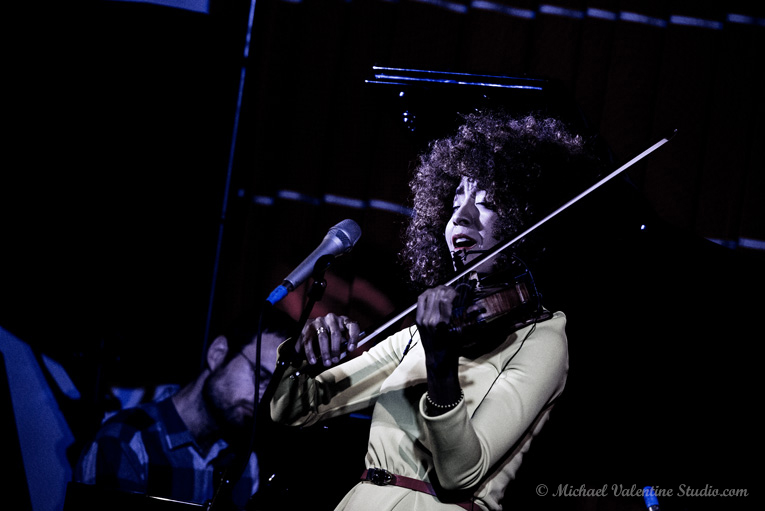
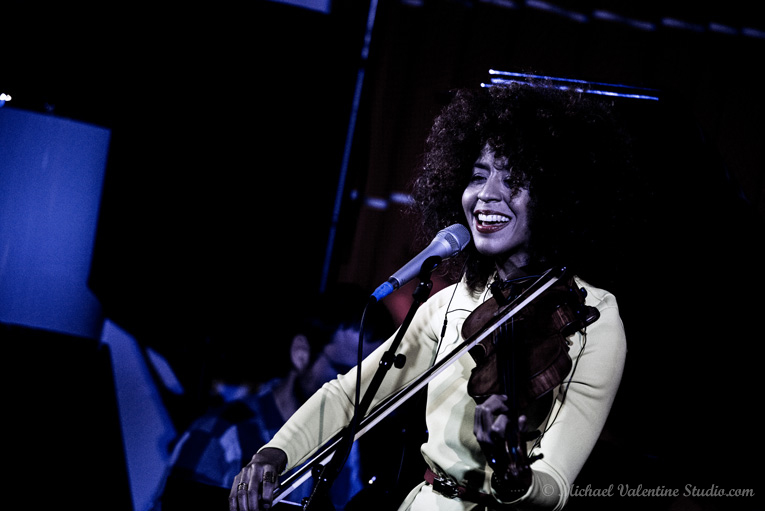
and the ease with which she sings and plays violin simultaneously,
Cañizares is a bona fide discovery.
“My sound reflects the richness and mixture of cultures
that I carry with me today,” she says in her fluent,
accented English. “It is who I am: a woman. A Cuban.
A musician. A citizen of the world.”
Cañizares grew up in Vedado, the neighbourhood
next to Havana’s Plaza de la Revolution. Early musical memories
include her grandfather serenading her on guitar, and her mother
singing as she accompanied herself on piano.
“Every weekend I’d be taken
to see a classical orchestra, jazz quartet or salsa band,”
she remembers. “My mother said I’d be chatting
away, telling her I wanted to be up on the stage.”
Aged seven, she won a place at the prestigious
Manuel Saumell music academy, to study piano and violin. This
was the austerity-hit 1990s, Cuba’s so-called ‘Special
Period’: “It was tough getting equipment, getting
anything,” says Cañizares. She won the National
Violin Contest of Cuba four times, nonetheless.
Cañizares was 14-years-old when she was
offered a scholarship to study in Caracas, Venezuela. Two years
later, a masterclass with a visiting Swiss-based teacher changed
her life. “He told me I was gifted, and encouraged me
to apply for a place at his music conservatory.”
In 2000 Cañizares found herself in western
Switzerland, where her playing and technique hit a whole new level.
Big name orchestras beckoned: on moving to Lausanne she spent
six years contributing note-perfect takes to symphonies, concertos
and operas. Along the way, she began to feel like she was losing
something. Craving a creative outlet, she quit.
“I was so inspired by [French jazz
violinist] Stéphane Grappelli. The possibilities just blew
me away. I wanted to translate this Grappelli universe to my tradition,
and make it just as beautiful.”
She assembled a quartet of musicians from Germany,
Venezuela and Switzerland (and later, Cuba) and named it Ochumare,
after the orisha deity of rainbows. Six months later, they won
the 2008 Montreux Jazz Festival Competition. It’s been upwards
ever since. In 2011 she graced Giles Peterson’s Havana Cultura
project, and has gone on to share stages with jazz gods including
Ibrahim Malouf and Omar Sosa. More recently, she’s sung
in French and Yoruba, the language of her West African ancestors,
enhancing the lyrics with AfroCuban percussion.
“The traditional Yoruba canon is a
huge influence,” she says. “These songs are
melodic, rhythmic and powerful.”
“Invocación” is a homage
to Cañizares’ nearest and dearest. Her parents, grandparents,
husband. Cuban women. The Orishas. Icons such as French icon Piaf,
Venezuelan composer Simón Diaz and Cuban poet Luis Carbonell.
“It wasn’t until I was half
way through making the album that I realised how much it was inspired
by people who were no longer here. AfroCuban belief says the spirits
of those you love and admire from a personal or artistic point
of view continue to stay around you. I find that beautiful.”
Yilian Cañizares, then. A woman born
in Cuba and living in Switzerland. An artist as passionate about
classical music as she is about jazz, salsa, hip hop and rhythms
from elsewhere. A unique performer who, when called upon, is able
to join voice and violin and express herself as an orchestra might.
“I have a relationship with the violin
that is passionate and precious,” she says of her current
Italian-made instrument. “He is like a partner, a lover.
We complement each other.” She pauses, smiles.
“We still have a long way to go, he and I,”
she says. “Always to the service of the music, and the
ancestors.”
Biography by Jean Cornwell

Go
back to the London Jazz Festival 2017 home page.
Go
back to the jazz gallery.
[ Top ]