|
John Etheridge & Nigel Kennedy
@ the PizzaExpress Jazz Club
10 September 2013
Click an image to enlarge.
John Etheridge biography
John Etheridge rightly enjoys a glowing reputation throughout the
jazz world and beyond and has been described by Pat Metheny as,
“One of the best guitarists in the world”. He is a prodigiously
gifted and creative player whose approach to music can only be described
as ‘eclectic’ as he refuses to accommodate or even acknowledge
artificial musical boundaries. His range is well illustrated by
his years of touring and recording with the iconic Stephane Grappelli
while simultaneously doing likewise with the legendary jazz-fusion
group, The Soft Machine. John is equally at home on acoustic and
electric guitar and his willingness to engage with so many styles
is matched by his ability to excel in any of them. He has played
with John Williams, Yehudi Menuhin, Dizzie Gillespie, Herb Ellis,
Mundell Lowe, Nigel Kennedy, Pat Metheny, Birelli Lagrene, Barney
Kessel, Vic Juris and countless others.
Ehteridges’s ability as an outstanding composer is sometimes
overlooked but he is often under pressure from audiences to feature
more of his own material. His promise was evident even during his
earliest days of playing and he received recognition and encouragement
from both Jimi Hendrix, whose comment was “You’re
great”, and Eric Clapton, who told him after a gig, “You're
not a great blues player but you’re a great guitarist.”
After graduating in the History of Art in 1970 from Essex University
and returning to London, Etheridge started to get seriously noticed
when working in the various bands such as ex-Curved Air violinist
Darryl Way’s Wolf, an early jazz/rock outfit with whom he
recorded three albums. Others included Icarus, Abednigo (which had
a woodwind player named John Altman, later to become a famous film
director), the short-lived Warhorse and the wonderfully monikered
Global Village Trucking Company. His 1975 leap into the front rank
came when he was contacted by The Soft Machine after they had been
given his number by the departing Allan Holdsworth.
“The album ‘Bundle’ was just out, and I started
by promoting that. Then we did this great Summer tour with Mahavishnu
Orchestra, Soft Machine, Caravan, Climax Blues Band, Wishbone Ash,
all together, on this Hercules transport aeroplane, flying at 80
miles an hour - took about 4 hours to fly from Stuttgart to Marseille!...
Unfortunately, the whole thing went bankrupt in the middle of it”.
It is a measure of both the breadth of Etheridge’s ability
and the recognition and regard he commanded from fellow musicians
that less than a year after joining The Soft Machine, the great
Diz Disley suggested that he would be Disley’s ideal successor
to play alongside the stellar jazz violinist and ex-sparring partner
of Django Rheinhardt, Stephane Grappelli. When Etheridge met up
with Stephane (on a borrowed Framus acoustic guitar), he did not
consider himself remotely to be a ‘Django’ player but
he knew the repertoire and was a great improviser. He clearly made
his mark because he spent the next 6 years touring the world in
collaboration with Grappelli in what he describes as one of his
happiest times in music; he certainly refers to this period with
great affection.
Through the eighties and nineties, Etheridge could be found honing
his craft and extending his range even further with collaborations
with the likes of Vic Juris and Dick Heckstall-Smith. In the late
seventies and early eighties he played a series of solo concerts
in Australia (where he was given an early Smallman acoustic guitar
by its admiring maker) and went on to play duo dates in the USA
with bass-player Brian Torff with whom he had worked in the Grappelli
band. During 1985, Etheridge worked with fellow guitarist Gary Boyle
in both duo and quartet set-ups. Between ‘89 and ‘93
he then toured with Whatever led by the ubiquitous ex-Pentangle
bass-player Danny Thompson and joined luminaries such as Alan Skidmore,
Stan Tracey and Henry Lowther on the 1990 album Elemental. Around
this time John was also working frequently with Elton Dean as the
Elton Dean/John Etheridge Quartet with a rhythm section comprising
of Fred Baker and Mark Fletcher on bass and drums respectively.
The great Manouche guitarist, Birelli Lagrene was another touring
partner in what was a gypsy jazz feast for their audiences.
Etheridge’s theme of working with the cream of violinists
was to continue when he played with Didier Lockwood, featuring on
his first album, New World, as part of an all-star line-up including
Gordon Beck (piano), Tony Williams (drums) and Niels-Henning Ørsted-Pedersen
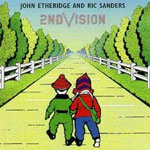
(bass). With Ric Sanders he then formed the band Second Vision and
recorded the eponymous album.
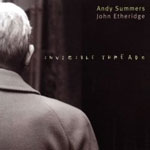
From 1993, Etheridge toured extensively with Nigel Kennedy and
was featured on the 1996 album “Kafka”. 1994 saw John
joining his long-time friend and ex-Police guitarist Andy Summers
for a world tour and they released the album “Invisible Threads”
as a duo.
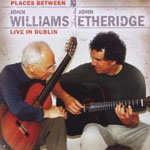
In July 2006, Etheridge began touring a great new programme in
a duo set-up with John Williams, the most celebrated classical guitarist
of this generation. The two Johns have worked together before, most
notably on their interpretations of African music with Francis Bebey,
Richard Harvey, Chris Laurence and Paul Clarvis and documented on
the CD “The Magic Box”. John Williams had always retained
a desire to explore further the enticing combination of classical
and steel-string guitar and got back in contact with Etheridge to
realise this ambition.
A measure of the universal respect for John Etheridge’s accomplishment
and skill was his nomination as one of just three finalists for
the highly prestigious award for the 2006 Jazz Musician of the Year,
presented on May 10th at the Parliamentary Jazz Awards ceremony
at the House of Commons.
Nigel Kennedy biograpy
“An immensely gifted musician who is comfortable in his
own skin!”
For over twenty-five years, Nigel Kennedy has been acknowledged
as one of the world's leading violin virtuosos and is, without doubt,
one of the most important violinists Britain has ever produced.
His virtuoso technique, unique talent and mass appeal have brought
fresh perspectives to both the classical and contemporary repertoire.
He is the best selling classical violinist of all time.
From a young age, he was Yehudi Menuhin’s most famous protégé,
studying first at the Menuhin School before moving to the Juilliard
School of Music in New York to study under celebrated teacher, Dorothy
DeLay.
During his career, Nigel Kennedy has undertaken countless international
tours, performing with the world’s leading orchestras and
conductors throughout Europe, North America, Central and South America,
South East Asia and Australia.
Nigel Kennedy has attracted an enormous amount of worldwide media
attention throughout an extraordinary career and his international
television appearances have been wide and varied. He has given public
and private performances for members of the British royal family
and has also been presented with many awards including, amongst
others, Outstanding Contribution to British Music and Male Artist
of the Year at the UK Brit Awards; in France a Vivement Dimanche
Gold Award, numerous Echo Awards and Switzerland’s Gold Rose
of Montreux.
Nigel Kennedy’s multi-award-winning discography is extensive.
His first highly-acclaimed recording was Elgar’s Violin Concerto
which was voted 1985 Record of the Year by Gramophone magazine and
was awarded Best Classical Album of the Year at the BPI Awards.
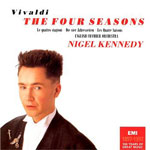
His first landmark recording of Vivaldi’s Four Seasons earned
a place in the Guinness Book of Records as the best-selling classical
work of all time. It sold in excess of 2 million copies and the
album remained top of the UK classical charts for almost two years.
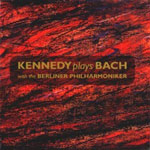
His second Vivaldi volume with the Berliner Philharmoniker won the
prestigious German Echo Award for Best Performance of 18th Century
music and the supreme Austrian Classical Award, The Amadeus Prize,
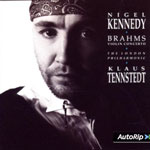
for Best Instrumental Recording. He has also made best-selling concerto
recordings of Bach, Beethoven, Berg, Brahms, Bruch, Mendelssohn,
Sibelius, Tchaikovsky and Walton, alongside chamber music and recital
discs.
His passion for jazz resulted in the album Blue Note Sessions,
made under the eye of Grammy award winning producer Jay Newland,
featuring a band of jazz giants such as Ron Carter and Jack DeJohnette,
amongst others.
In September 2002, Kennedy was appointed Artistic Director of the
Polish Chamber Orchestra, a role the late Lord Menuhin once held.
With this orchestra, he rediscovered a stunning and forgotten late
Romantic Polish concerto, Emil Mlynarski’s Violin Concerto
No 2 and combined it with Mieczyslaw Karlowicz’s Violin Concerto
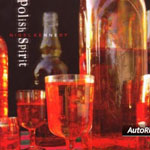
in A major, which was released under the title ‘Polish Spirit’
in 2007. ‘Polish Spirit’ has won numerous awards the
world over, including the prestigious Echo Klassik Award in Germany
(Instrumentalist of the Year) and Poland’s Fryderyki Album
of the Year Award.
Kennedy’s 2009 release, named in typically idiosyncratic
fashion, A Very Nice Album, marked a typically bold excursion into
non-classical repertoire and was recorded with his group, ‘The
Nigel Kennedy Quintet’, made up of the violinist and four
of the most dynamic musicians on the Polish jazz scene. His earlier
Bluenote album focussed on interpreting compositions from past masters
of the jazz repertoire but, for A Very Nice Album, Kennedy stepped
to the fore as composer as well as improviser. 2010 saw the release
of the latest Nigel Kennedy Quintet release of mainly original Kennedy
compositions, entitled SHHH! The album also features Kennedy’s
arrangement of Nick Drake’s Riverman, sung by Boy George.
The violinist recently founded a new orchestra, made up of vibrant
young (mainly Polish) musicians. In April 2010, the Orchestra of
Life made its debut tour in Germany, presenting a unique programme
of Duke Ellington (specially arranged by Nigel Kennedy for his band
and the Orchestra of Life) and Bach, before going on to perform
in major cities and festivals in Europe.
2010 saw Kennedy present a project inspired by the music of Jimi
Hendrix; a performance at Ronnie Scotts (the last venue Hendrix
performed at) on the 40th anniversary of the musician’s death
was a triumph.
In 2010, Kennedy’s UK performances of Vivaldi’s Four
Seasons were a staggering success, and included a stunning, sold
out show at London’s Royal Albert Hall. Nigel Kennedy has
undertaken a major 2011 tour, performing his exhilarating and unique
new take on Vivaldi’s Four Seasons as well as his own brand
new composition, the Four Elements.
In February 2012 he presented Bach plus Fats Waller across Asia.
An entirely acoustic programme developed for venues with natural
acoustics. The first half consists of solo Bach pieces and, for
the second part, Kennedy has arranged the music of Fats Waller for
violin, guitar, bass and percussion.
Nigel Kennedy records for Sony Classical, which has released The
Four Elements. Referring to the Bach meets Fats Waller programme,
Kennedy recorded parts of this repertoire and other pieces under
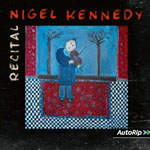
the title Recital that Sony Classical releases in March 2013.
Nigel Kennedy is a passionate Aston Villa fan and attends as many
games as his schedule allows. He has one son, is married to Polish
lawyer, Agnieszka, and they divide their time between homes in the
UK and Poland.
As well as several customised 5 string electric violins, Nigel
Kennedy plays a 1732 instrument by the great violin maker, Carlo
Bergonzi of Cremona. |


.jpg)
.jpg)
.jpg)
.jpg)
cr.jpg)
.jpg)
adjusted.jpg)
.jpg)
.jpg)
.jpg)
.jpg)
.jpg)
.jpg)


_150preview.jpg)
_150preview.jpg)